











SHOPIFY STOCKY: SUNSET AUGUST 31, 2026

Fuse vs. Shopify Stocky

Shopify folded Stocky's basics into native Admin and POS on August 31, 2026. What comes next for multichannel brands?

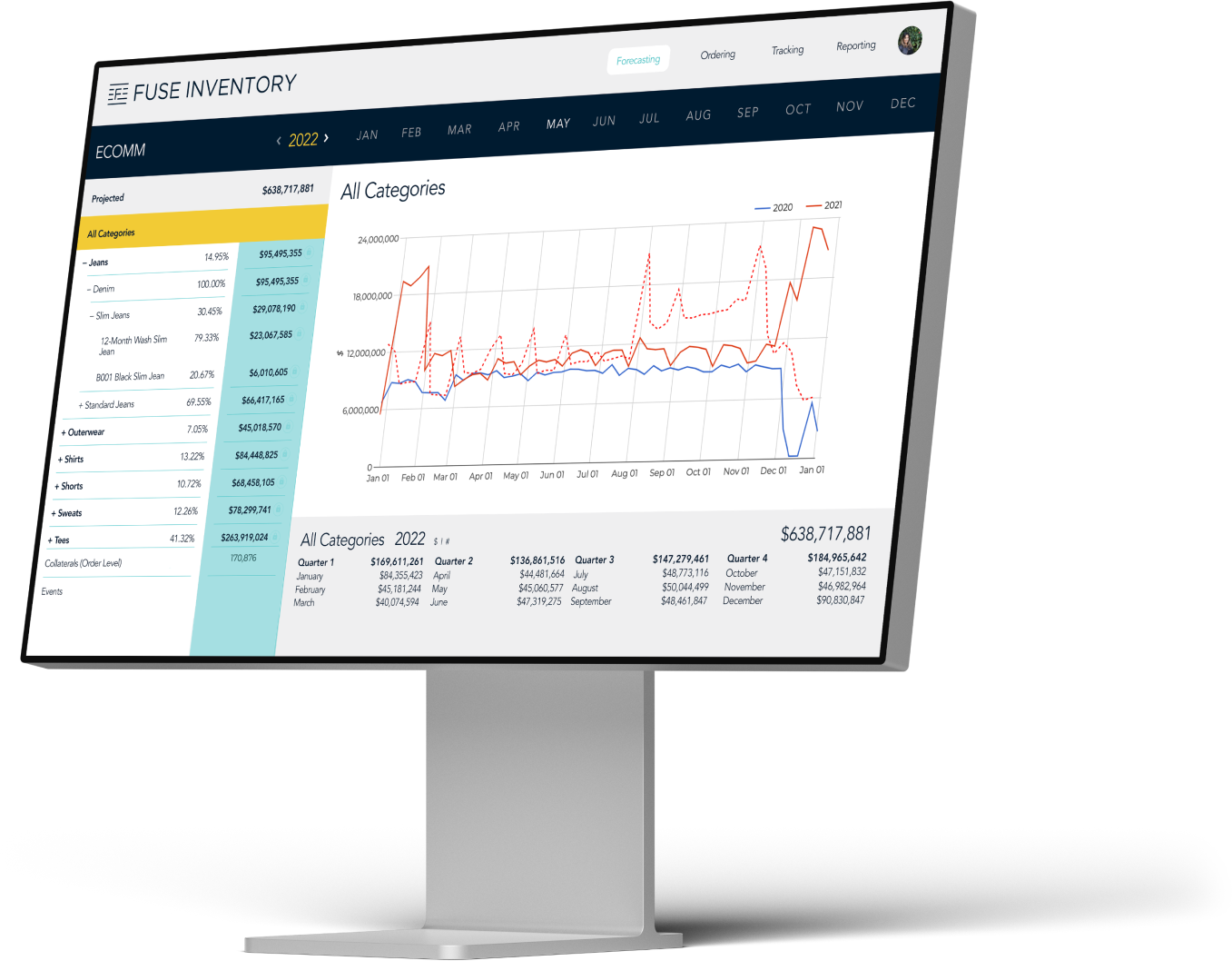
Fuse demand planning and inventory software dashboard showing daily SKU-level forecasts

Bottom Line

Shopify didn't replace Stocky with something better. It pulled Stocky from the Shopify App Store on February 2, 2026, then folded the basics into Admin and POS. Native Shopify now gives you purchase orders, transfers, and low-stock alerts, limited to only what's in Shopify. 

What you don't get: a real demand forecast, vendor performance, multi-level kitting, or anything that lives outside of Shopify. That's fine for a single-channel shop, but a deal-breaker for a brand expanding across channels.

Fuse is the inventory and purchasing brain for brands running Shopify plus everything else: Amazon, wholesale, retail, and 3PL. Get AI-powered order recommendations across every channel and track inventory across every location, all in one platform. 

Control

Purchasing that runs like a system

A real PO workflow with per-line receiving, partial receipts, and cost updates on arrival. Restock recommendations tell your team what to buy before you stock out.

Control

AI reads your vendor POs and invoices

Upload a vendor PO or invoice PDF and Fuse extracts the line items, matches them to the right order, and handles partial invoicing. In Stocky, every PO was typed by hand.

Confidence

Demand forecasting, not a reorder button

Seasonality, trend and holiday effects, and sales-mix modeling drive every recommendation. Stocky’s reorder logic was sales-velocity math with no seasonality or trend layer.

Cash

Real multi-level kitting and BOMs

Kits built from kits and nested assemblies, with cost rolled up through every level into unit cost. Neither Stocky nor native Shopify tracks components at all.

Control

Vendor performance built into ordering

On-time delivery history, days late, and cost per unit feed directly into lead times and reorder timing. It is part of how you order, not a report nobody opens.

Clarity

About 40 connectors, not one cart

Shopify, Amazon, 20+ 3PLs and WMS platforms, and ERPs like NetSuite and QuickBooks. Stocky never had to leave Shopify. Most growing brands already have.

Capability Fuse Stocky (legacy) Native Shopify
Purchase orders & partial receiving ● ● ◐
PO & invoice PDF import with AI extraction ● ○ ○
Vendor performance tracking ● ○ ○
Demand forecasting (seasonality, trend, sales-mix) ● ◐ ○
Restock recommendations ● ◐ ○
Multi-location transfers ● ● ●
Multi-level BOM / kitting ● ○ ○
Sales & channel reporting (any connected channel) ● ◐ ◐
Platform & channel scope ~40 integrations Shopify only Shopify only
Still running today ● ○ ●
● Full ◐ Partial ○ Not available

Comparison reflects Shopify’s native inventory tools and the legacy Stocky app as of 2026.

Brands on Fuse cut overstock by ~70%, driving ~10% revenue growth in their first 6 months

Source: Analysis of Fuse Customer Data, 2026


Revenue growth icon

10%

Average Revenue Growth

Overstock reduction icon

70%

Average Overstock Reduction

SKUs managed icon

792K

SKUs Managed

Gross sales volume managed icon

$4B

Gross Sales Volume Managed

Purchase orders placed icon

28K

Purchase Orders Placed

When a company is growing over 150% per year like SuitShop, a dynamic tool that updates inventory demand daily is critical. Fuse has taught us a lot about the popularity of our product assortment and helps us optimize our purchase orders to ensure we make the most of our inventory investments. 

Diana Ganz

CEO, SuitShop

Prior to Fuse, I was managing our entire planning process using Excel, so I oftentimes joke that Fuse was my first hire.


Erica Peppers

Product & Operations, Snowe

Fuse has significantly lightened our workload as the breadth of our SKU offering required painstaking, time consuming analysis. Because of Fuse, we were able to better use our capital and time.


Sarah Pierson

Co-Founder, Margaux

Popular Resources

FAQs

Stocky shut down. What do we do now?

You have two real options: get by on Shopify’s native tools, or put a proper system back in place. Shopify covers purchase orders, transfers, and low-stock alerts, but not forecasting, vendor performance, or kitting. Fuse covers all of it and gets you running again in weeks.

Can’t we just use Shopify’s built-in inventory tools?

You can, but they only cover the basics: purchase orders, transfers, and low-stock alerts through Flow. What they don't cover is real demand forecasting, vendor performance, kitting, and PDF or invoice ingestion, and nothing outside Shopify. Fine for a single-channel shop, but a dealbreaker for a multi-channel brand.

We didn’t export our Stocky data before it shut down.

Historical POs, suppliers, and count history that were not exported by August 31 are gone, and no tool can bring them back. The priority now is getting a real system in place so you are building clean data again. If you did export, Fuse can import it through CSV and PDF.

We're not looking to switch platforms.

You don't need to. Fuse sits behind whatever storefront you already run. This is not a replatform. It's swapping in the backend inventory brain that Stocky used to be.

How fast can we be running again?

Most brands are up in a matter of weeks, not the months a full ERP takes. Unlimited seats mean the whole team is in from day one. The sooner you start, the less time you spend flying blind on the native Shopify tools.