TARIFF MANAGEMENT
Keep track of your actual import costs with the inventory operations platform built for multi-level BOMs and tariff-exposed sourcing.
Trusted by CPG brands managing tariff exposure

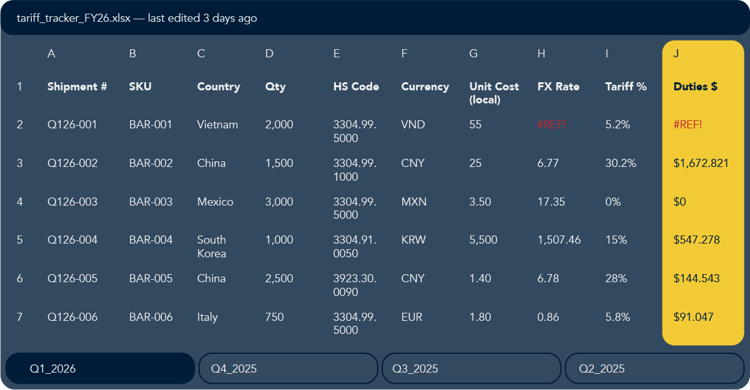
Spreadsheets weren’t built for tariff volatility. Fuse replaces the tariff column with a system built for shifting rates and complex components.
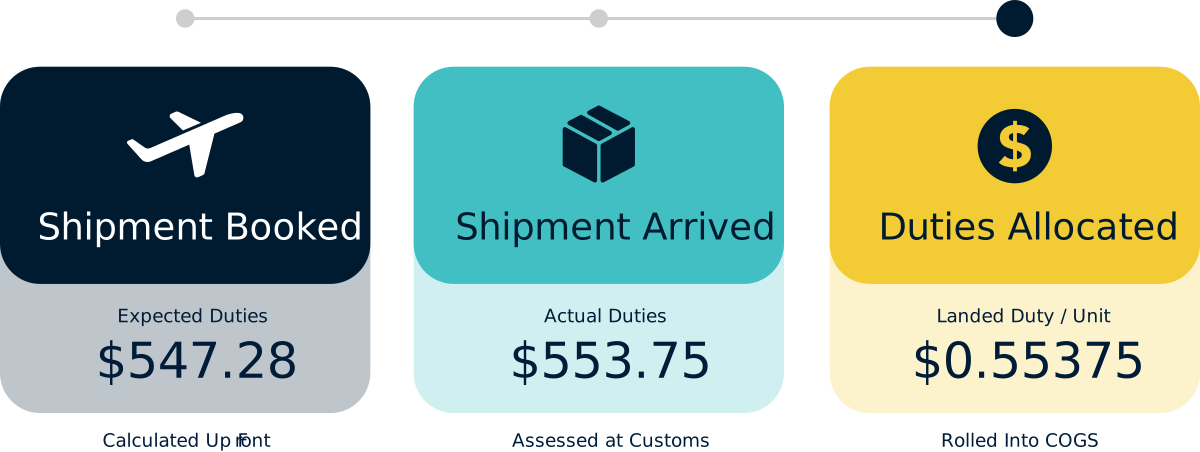
Estimate duties for each line item before goods ship, then allocate actuals by quantity or value when the invoice arrives. Landed unit cost and COGS update automatically.

Each component carries its own cost and duty. Fuse rolls them up into the finished good so COGS reflects what you actually paid, down to the last component

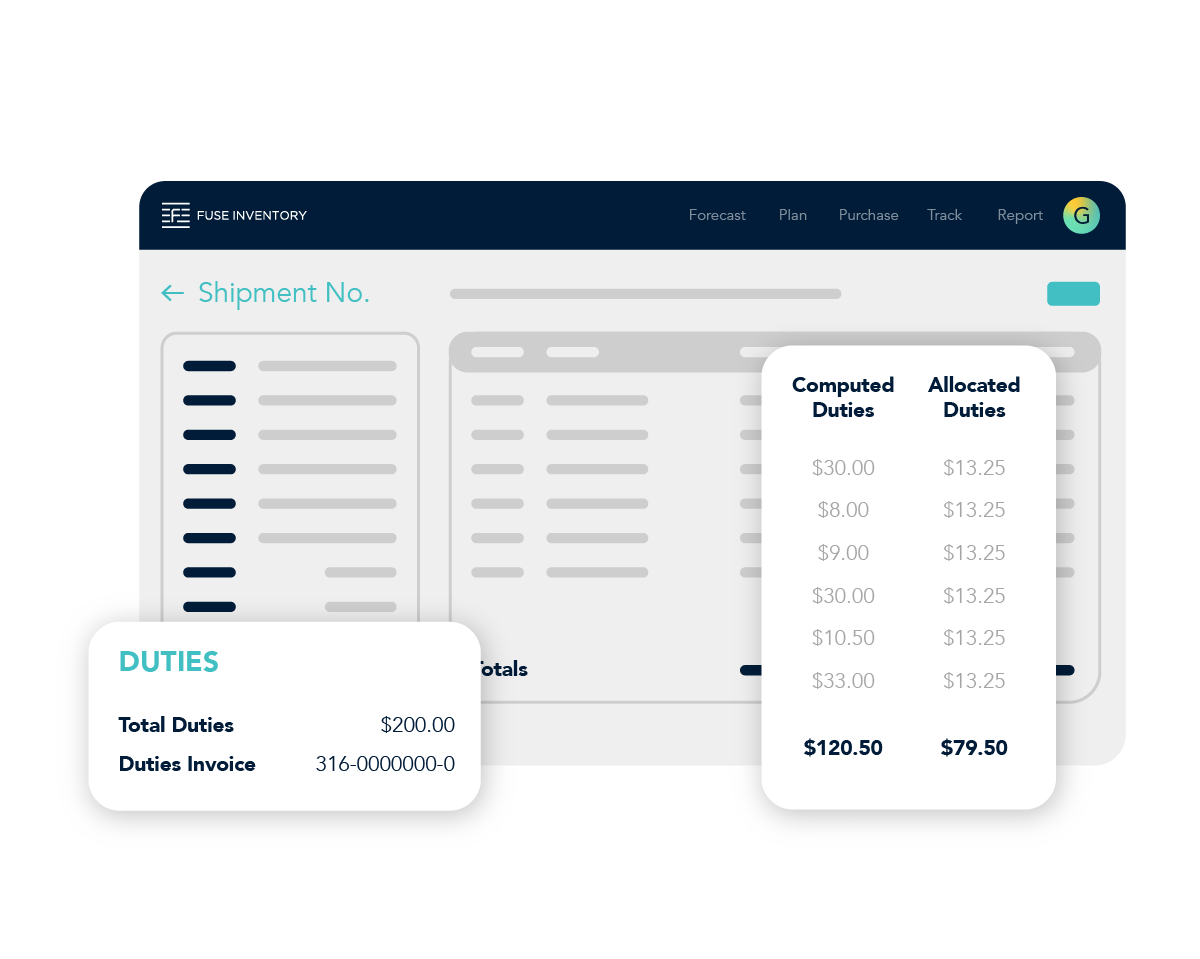
Fuse computes each item's own duty from its duty rate, then splits the remaining duties across the line items by quantity, weight, or value. Each unit carries its real share instead of a flat average.
Fuse layers every import cost onto the product cost. Fuse computes the duty for each line item from the rate you enter, then spreads the rest of the shipment's duties, freight, and fees across the items by quantity, value, or weight. All of it rolls into a weighted-average landed unit cost, so you can see what a unit costs to land versus what it cost to buy.
Yes. Fuse supports multi-level BOMs, and every component carries its own cost and duty. A product built from parts in different countries gets duty-rated correctly and rolls up into one landed cost.
You set the duty rate on the shipment, and Fuse handles the rest. It computes the duty per line item and rolls the result into landed unit cost and COGS. Enter a new rate and the updated landed cost flows straight through your margins and reporting, with no formulas to rebuild.
No. Fuse takes over the tariff column and the manual entry behind it. Estimated duties, actuals, and landed cost live in one place with a full audit trail.